

A block making machine is only as consistent as the material feeding it. An undersized or poorly matched aggregate hopper leads to uneven mixing, frequent stoppages, and inconsistent block quality – even if the block machine itself is top-of-the-line. Choosing the right aggregate hopper for block machine setups means matching feeding capacity, automation level, and storage volume to your daily production target. This guide walks through the options so you can pick a hopper that keeps your line running smoothly.
What Does an Aggregate Hopper Do?
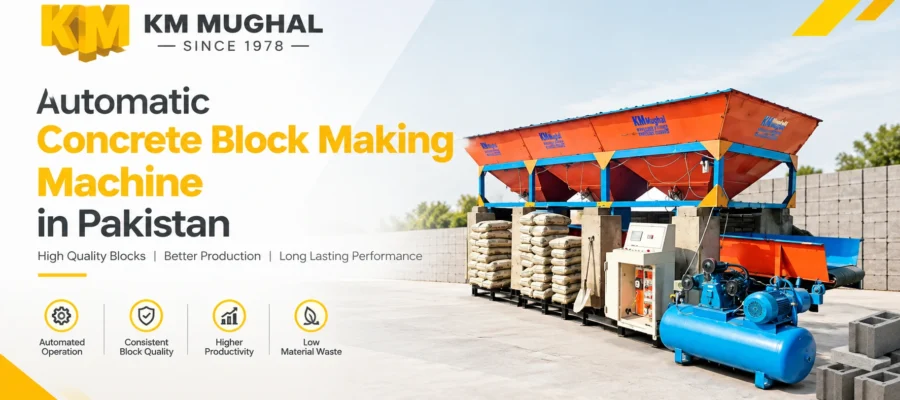
An aggregate hopper stores and feeds sand, gravel, and other raw materials into a block making machine at a controlled rate. It’s a core part of any aggregate feeding system, ensuring the block machine receives a steady, measured supply of material rather than manual, inconsistent loading.
Aggregate Hopper 10000W vs 20000W vs 30000W: Which Capacity Fits?
KM Mughal’s aggregate feeding systems come in three power and capacity tiers, each suited to a different scale of operation:
- 10000W – suited to small and medium block plants with moderate daily output
- 20000W – a mid-capacity option for growing operations that need steadier, higher-volume feeding
- 30000W – built for large, high-output plants running continuous production cycles
You can compare the full specifications on the Industrial Aggregate Feeding System 10000W, 20000W, and 30000W product pages.
Choosing an Aggregate Hopper for Concrete Blocks: Key Factors
- Daily block production target
- Type of block machine it will feed (manual, semi-automatic, or fully automatic)
- Storage capacity needed on site
- Level of automation required for weighing and discharge
- Available power supply and site layout
Industrial Aggregate Hopper Capacity: Matching Feed Rate to Output
An oversized hopper wastes floor space and capital; an undersized one becomes the bottleneck in an otherwise capable production line. The right approach is to size the industrial aggregate hopper capacity to your block machine’s actual throughput, with some margin for future growth – not to buy the largest available unit by default.
Aggregate Hopper vs Mixing Batching Unit: What’s the Difference?
An aggregate hopper stores and feeds raw material (sand, gravel) into the system, while a Concrete Mixing Batching Unit combines and proportions materials – cement, aggregate, and water – into a finished mix. Many plants use both together: the hopper handles feeding, and the batching unit handles precise mixing before the material reaches the block machine.
Automated Aggregate Feeding System: Is It Worth It?
An automated aggregate feeding system reduces manual handling, improves feeding consistency, and cuts down on labor-related downtime. For plants running multiple shifts or higher block volumes, automation typically pays for itself through fewer production stoppages and more uniform block quality.
Aggregate Hopper Price in Pakistan: What Affects the Cost
Pricing depends on a handful of factors rather than a flat rate:
- Power rating and feeding capacity (10000W, 20000W, 30000W)
- Level of automation (manual discharge vs. automated weighing)
- Storage volume and hopper size
- Build material and structural quality
Matching the hopper to your actual production needs – rather than buying oversized – keeps the investment cost-effective.
Choosing a Reliable Aggregate Hopper Manufacturer in Pakistan
Consistent feeding equipment needs to hold up to daily, continuous use. As an aggregate hopper manufacturer in Pakistan, KM Mughal builds feeding systems across all three capacity tiers and pairs them with compatible concrete mixer machines and block making equipment for a complete production line.
FAQs
What is the best aggregate hopper for a small block plant?
A 10000W aggregate feeding system is usually sufficient for small to medium block production.
How do I know what hopper capacity I need?
Base it on your daily block production target and the feed rate your block machine requires.
What’s the difference between a hopper and a batching unit?
A hopper stores and feeds raw material, while a batching unit mixes and proportions the final concrete.
Are automated feeding systems worth the extra cost?
For higher-volume or multi-shift operations, yes – they reduce labor and improve feeding consistency.
What affects the price of an aggregate hopper in Pakistan?
Power rating, capacity, automation level, and build quality are the main cost factors.
Get the Right Aggregate Hopper for Your Plant
Matching hopper capacity to your block machine’s actual feed rate is what keeps production consistent and cost-effective. Explore KM Mughal’s Aggregate Hopper range or get in touch with our team to size the right feeding system for your plant.
Related Posts

Post a Comment